Measured facial analysis
Know your face.
By the numbers.
478 facial landmarks measured in your browser. Eleven evidence-based metrics against published cephalometric ranges. A calm, written report with a plan you can act on — in 60 seconds, not 28 days.
See a full sample report first: female · male
478
landmarks
11
metrics measured
60s
not 28 days
0
photos stored
 Landmark model468 pts · live
The science
Your face is measurable. The research is decades deep.
We didn't invent these metrics. They come from peer-reviewed economics, psychology and clinical cephalometry — we just measure them on your photo, instantly.
10–15%
higher lifetime earnings
The 'beauty premium' in labor markets is one of the most replicated findings in economics: above-average-looking workers out-earn below-average ones.
(Hamermesh & Biddle, American Economic Review, 1994)
“What is beautiful is good”
the halo effect is real
Attractive people are judged more competent, trustworthy and sociable — before they say a word. The effect has held across five decades of replication.
(Dion, Berscheid & Walster, 1972; Eagly et al., 1991)
Cross-cultural
judged alike, treated alike
A meta-analysis of 919 studies found people agree on facial attractiveness within and across cultures — and treat attractive people measurably better.
(Langlois et al., Psychological Bulletin, 2000)
Symmetry · averageness · dimorphism
the geometry is known
Decades of perception research converge on a small set of measurable drivers of facial preference. They are geometry — which means they can be measured.
(Rhodes, Annual Review of Psychology, 2006)
1:1:1
proportions have reference ranges
Clinical facial analysis — the kind surgeons and orthodontists are trained on — works from published proportion canons and ranges, not vibes.
(Farkas, Anthropometry of the Head and Face; Powell & Humphreys, 1984)
E-line
your profile has coordinates
Cephalometric reference lines like Ricketts' esthetic line have been standard in orthodontics for half a century. The same literature powers our ranges.
(Ricketts, American Journal of Orthodontics, 1968)
Citations refer to published, peer-reviewed work on facial perception and clinical facial analysis. None of these authors are affiliated with FaceAtlas — and none of this research says your worth is your face. It says faces can be measured. So we measure them honestly.
A different way
Clinics are slow. Score apps are fake. Reports take a month.
The existing options force a bad trade: pay hundreds and wait weeks for rigor, or get an instant number a model hallucinated. We built the third option.
| Aesthetic clinic | Mail-order report | FaceAtlas | |
|---|---|---|---|
| Delivery | Weeks of appointments | Up to 28 days | ≈ 60 seconds |
| Price | $200–$500 consult | $150 / year | $29, once |
| Where numbers come from | Caliper + opinion | CV pipeline + AI prose | Deterministic geometry — same photo, same numbers |
| Your photo | In your clinical file | Uploaded & retained | Landmarks computed in your browser, photo never stored by us |
| Output | A sales pitch for procedures | PDF + protocol | Measured report + non-surgical plan |
| Single 'attractiveness score' | — | Biometric scores | Never. Zone measurements, not a verdict |
What we measure
Eleven metrics. Published ranges. Your coordinates.
Every measurement below is computed from your facial landmarks with pure geometry, then placed against reference ranges from the cephalometric literature. No AI guesses a single number.
Canthal tilt
4.2°
Facial width-to-height (fWHR)
1.91
Eye spacing (intercanthal ÷ eye width)
1.04
Jaw ÷ cheekbone width
0.91
Mouth ÷ nose width
1.52
Lower ÷ upper lip height
1.62
Facial thirds
Bilateral symmetry
Face length ÷ width
1.36
ideal 1.25–1.45
Chin angle
106°
ideal 90–115°
Nose ÷ intercanthal
0.83
ideal 0.85–1.15
IPD ÷ face width
0.45
ideal 0.42–0.48
Example values shown. Your report computes all eleven from your own landmarks — and tells you which ranges are population-dependent approximations, because honesty beats theater.
How it works
One photo. Sixty seconds. No clinic.
Step 1
Upload one front-facing photo
Neutral expression, even light, hair off the face. The photo opens in your browser — and at this step it stays there.
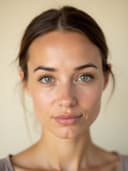
portrait.jpg · 2.4 MB
✓ face detected
Step 2
478 landmarks, measured on your device
A neural landmark model maps your face in-browser. Pure geometry then computes 11 metrics and places each against its published range.
Step 3
Your written report & plan
AI writes the interpretation around your numbers — never the numbers themselves. Zone by zone, strengths first, with a prioritized non-surgical plan.
Eyes & orbital area
“A mild positive canthal axis sits comfortably within the reference range…”
Action plan · #1
Introduce a retinoid at night — impact 3/3, effort 1/3
Why trust the numbers
Numbers from geometry. Words from AI. Never the reverse.
Multimodal AI models score around 35% accuracy when asked to measure facial ratios from photos — so we never ask them to. Measurement and interpretation are architecturally separated.
ƒ(x)
Deterministic core
Every metric is a geometric function of your landmark coordinates. Upload the same photo twice, get the same eleven numbers twice. Score apps can't say that — re-submit the same selfie and watch their “score” wander.
Aa
AI writes prose only
The written interpretation is generated under a strict schema that forbids the model from producing or altering any measurement. It explains your numbers in plain language — it never invents them.
🜲
Private by architecture
Landmark detection runs in your browser. After payment your photo is used transiently: for the written skin assessment (processed in memory, never written to disk by us) and by an external image-generation service solely to render your simulations — its temporary uploads auto-delete within at most 3 days. No account, no photo archive.
The full battery
Five zones. Eleven measurements. Every range disclosed.
No padded '160+ markers' marketing. Here is exactly what gets measured, and against which range — before you pay a cent. Measurements marked with a green dot can drive a visual simulation: your report renders the three features your numbers flag most, plus a combined view.
Facial proportions
3- Facial width-to-height ratio (fWHR) vs 1.75–2.05
- Facial thirds balance, max deviation vs ≤4%
- Face length ÷ width vs 1.25–1.45
Eyes & orbital area
3- Canthal tilt (per eye + average) vs +2° to +8°
- Eye spacing — intercanthal ÷ eye width vs 0.9–1.1
- Interpupillary distance ÷ face width vs 0.42–0.48
Nose & lips
3- Nose width ÷ intercanthal distance vs 0.85–1.15
- Mouth ÷ nose width vs 1.4–1.7
- Lower ÷ upper lip height vs 1.2–2.0
Jaw & chin
2- Bigonial ÷ bizygomatic width vs 0.85–0.95
- Frontal chin angle vs 90–115°
Symmetry
1- Bilateral landmark symmetry across 7 mirrored pairs, scored 0–100
Plus, in every report
- · Written skin assessment from your photo
- · Strengths & considerations per zone
- · 4–8 prioritized recommendations, ranked by impact ÷ effort
- · Visual simulations for your three most-flagged features + a combined view
- · Honest notes where a metric is an approximation
In development: profile-photo measurements (true gonial angle, nasofrontal angle) — frontal-only proxies are flagged as such in your report until then.
Try two of them free: canthal tilt · facial thirds
The deliverable
What your report looks like
A calm, structured document — not a dashboard screaming numbers at you. Example vignette below; every sentence in yours is written around your own measurements.

Facial analysis report · Example (synthetic subject)
“A balanced midface with a mild positive canthal axis and strong bilateral symmetry define this face's character.”
Eyes & orbital area
91Both canthal axes sit in the positive range, with the right eye at +4.6° and the left at +3.8° — comfortably inside the +2° to +8° reference band. Eye spacing follows the classical one-eye-width rule almost exactly…
Your action plan · top priority
Introduce a retinoid at night
Texture observations around the lower cheeks would respond well within 8–12 weeks…
skincare · impact 3/3 · effort 1/3
A fair question
Will analyzing my face make me insecure?
It's the right thing to ask before buying a product like this. Our answer is in the architecture, not the marketing.
No single score, by design
There is no '6.4/10' anywhere in your report. A face is not a number, so we refuse to produce one. You get eleven measurements with context — several will be strengths you didn't know had names.
Clarity beats rumination
Most appearance anxiety is vague. A measured report replaces 'something is off' with 'everything here is in range; this one ratio runs slightly wide — and here is what is and isn't in your control about it.'
Strengths first, always
Every zone leads with what measures well. Considerations are phrased gently, are never surgical, and the action plan is ranked so the easiest high-impact habits come first.
If appearance concerns are significantly affecting your wellbeing, a report is not the tool — a conversation with a professional is. We say this on the report itself, too.
The other fair question
Is it vain to care about your appearance?
The research says caring is rational: faces shape earnings, first impressions and how people treat you. Pretending otherwise doesn't change the data — it just leaves you guessing.
What this is
- · Understanding your own geometry, with honest ranges
- · Grooming, skincare and habit changes that compound
- · The same self-maintenance logic as the gym or a dentist
What this is not
- · Chasing someone else's face, or an ‘ideal’ one
- · A surgery referral engine — we never recommend procedures
- · A verdict on your worth, dating odds, or anything else
Pricing
A clinic consult runs $300. The annual report costs $150 and takes a month.
FaceAtlas is $29. Once. No subscription to forget, no upsell ladder, no 28-day wait.
Aesthetic clinic consult
$200–500
An hour with a specialist whose business model is selling you procedures. Notes on paper, if you're lucky.
Mail-order analysis
$150/yr
Up to 28 days of waiting, add-ons sold separately, and the written part is AI-assisted anyway — they say so themselves.
FaceAtlas
$29 one-time
- ✓All 11 measurements vs published cephalometric ranges
- ✓Zone-by-zone written interpretation — strengths first
- ✓Skin assessment from your photo
- ✓Prioritized action plan, ranked by impact ÷ effort
- ✓Printable / save as PDF
- ✓Delivered in about 60 seconds
Stripe secure payment · Pay only after your face is measured
FAQ
Frequently asked questions
How does the analysis actually work?+
A neural landmark model maps 478 points on your face — in your browser, on your device. Pure geometry then computes 11 metrics (canthal tilt, facial thirds, fWHR, symmetry and more) and places each against ranges published in the cephalometric and facial-perception literature. AI writes the explanation around those numbers; it is architecturally forbidden from producing numbers itself.
Can't I just ask ChatGPT to rate my face?+
You can — and it will confidently make the numbers up. In a 2025 peer-reviewed evaluation, leading multimodal models scored roughly 0.32–0.39 accuracy when measuring facial ratios from photos. Language models cannot place landmarks. That's why our measurements come from a dedicated geometric pipeline, and the AI only writes prose.
Is my photo stored anywhere?+
Not by us. Landmark detection runs in your browser. After payment, the photo is sent for the written skin assessment (processed in memory, discarded immediately) and to an external image-generation service solely to render your visual simulations — that service's temporary upload is automatically deleted within at most 3 days per its documentation. No account is created and no photo or biometric data is written to any database of ours. Your report lives in your browser session and as the PDF you save.
Will I get the same result if I run it twice?+
With the same photo — yes, to the decimal. The measurements are deterministic geometry, not model output. With a different photo, lighting and head pose shift landmark positions slightly, so values can move within a small range. That's physics, and we're honest about it.
Do you give me an attractiveness score out of 10?+
No, and we never will. A single score is scientifically indefensible and psychologically corrosive. You get eleven measurements with ranges and context — which is more useful and more honest.
Why is this $29 when others charge $150 a year?+
Because software measuring geometry shouldn't cost like a clinic. The expensive parts of legacy reports are manual review, Photoshop morphs and a 28-day pipeline. We automated the measurement honestly, kept the interpretation calm, and dropped what was theater.
How accurate are the measurements?+
Landmark detection is sub-pixel accurate on a good frontal photo; a few metrics (like the frontal chin angle) are honest approximations of measurements that strictly require a profile photo, and your report labels them as such. Reference ranges also genuinely vary across populations — we flag that instead of pretending one canon fits everyone.
Can I get a refund?+
If the report fails to generate after payment, you get your money back — write to us with your payment reference. If the analysis ran and you simply disagree with your geometry, that one's between you and physics.
Who is this for — and who is it not for?+
It's for adults curious about their facial structure who want measured facts and an actionable, non-surgical plan. It is not for minors, and it is not a medical or diagnostic tool. If appearance concerns are seriously affecting your wellbeing, please talk to a professional rather than buying a report.
Your face, measured. In the time it took to read this page.
One photo. Eleven measurements. A plan. Pay only after your face is measured.
Start my analysis — $29